
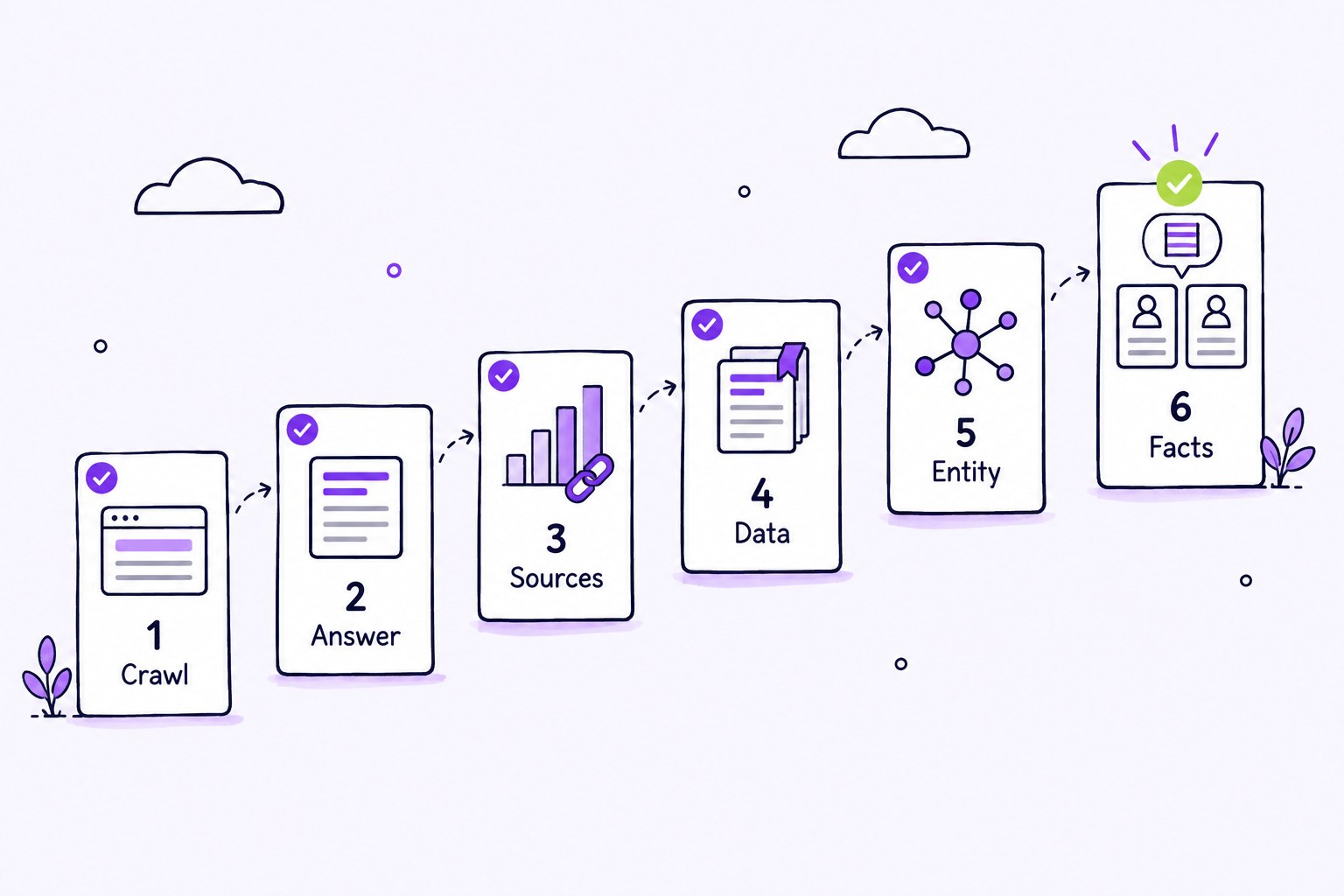
ChatGPT cites sources when it searches the web, and six verifiable actions can improve your odds of being one of them. We produce 2,500+ articles monthly for 500+ clients, and our principle is simple: a checkbox nobody can verify is empty ritual. Every step below ends with a pass/fail check. Most take under an hour; publishing original data and earning third-party mentions take longer.
This is the how-to companion to our ChatGPT SEO guide, which explains how training data and retrieval shape ChatGPT answers. Citations can’t be hacked into existence. They have to be earned.
How Do You Get Cited by ChatGPT?
Getting cited by ChatGPT comes down to making your pages crawlable and answer-first, backing them with sources, and describing your brand the same way everywhere on the web. Give people something distinctive to reference too. None of this guarantees a ChatGPT citation, and anyone promising otherwise is selling a trick.
A citation points readers to a supporting source, while a mention only names your brand. A citation lets readers inspect a source. It doesn’t endorse you, and it doesn’t prove every statement on the page is accurate. Strong rankings alone don’t ensure a citation either.
What Gets Cited: Retrieval vs. Training Data
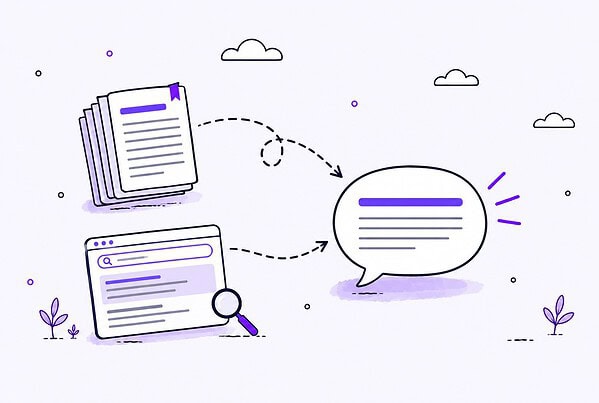
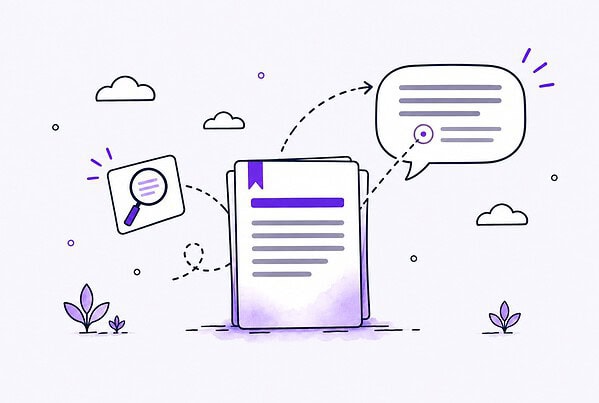
ChatGPT cites pages it retrieves from the live web; answers drawn from what the model learned in training have no documented citation process. ChatGPT may search automatically when a question would benefit from current information, users can select Search manually, and web-search responses may include citations and a Sources panel (OpenAI).
Citation patterns also shift. In Semrush’s study of ChatGPT prompt responses, Reddit citations fell from close to 60% in early August to around 10% by mid-September 2025 (Semrush). That’s a good reason to avoid chasing one source type.
Checklist Step 1: Can ChatGPT’s Crawlers Access Your Site?
ChatGPT’s crawlers can access your site only if you allow OAI-SearchBot in robots.txt and OpenAI’s published searchbot IP ranges in your firewall or CDN. Eligibility for ChatGPT search requires both, and placement is still not guaranteed (OpenAI Help). A site opted out of OAI-SearchBot won’t be shown in search answers, though it may appear as a navigational link (OpenAI Developers).
What to do:
- Add this to robots.txt:
User-agent: OAI-SearchBot
Allow: /
- Allow OpenAI’s published searchbot IP ranges in your firewall and bot protection.
-
Remove logins and form gates from pages that carry your main evidence.
-
Keep key answers in readable page text, not only in images or interactive elements.
- Decide on GPTBot and ChatGPT-User separately. Neither controls Search eligibility, and our ChatGPT SEO guide explains what each one does.
If your pages depend on JavaScript, consider server-side or pre-rendering. This is Google guidance, so treat it as general practice, since not all bots can run JavaScript (Google Search Central).
Done when: your robots.txt shows the rule live, your server logs or response codes show OAI-SearchBot receiving a successful response on a priority page, and the main text appears without JavaScript or login. Allow about 24 hours for robots.txt changes to take effect.
Owner: Agency, with the client’s hosting or CDN contact.
Checklist Step 2: What Should the First Sentence Under Each Heading Say?
The first sentence under each heading should answer the heading on its own, with the subject named. Retrieved passages are read out of context, so vague pronouns and scene-setting make a section harder to use.
What to do: Pick your priority pages. Under each question H2, put the direct answer first, then the reasoning, evidence, and qualifiers. Keep terminology and heading hierarchy consistent.
Done when: you read only the first sentence under each question H2, and it answers the heading without help.
Owner: Agency content team.
Rewrite Question-Based H2s With Direct Answers
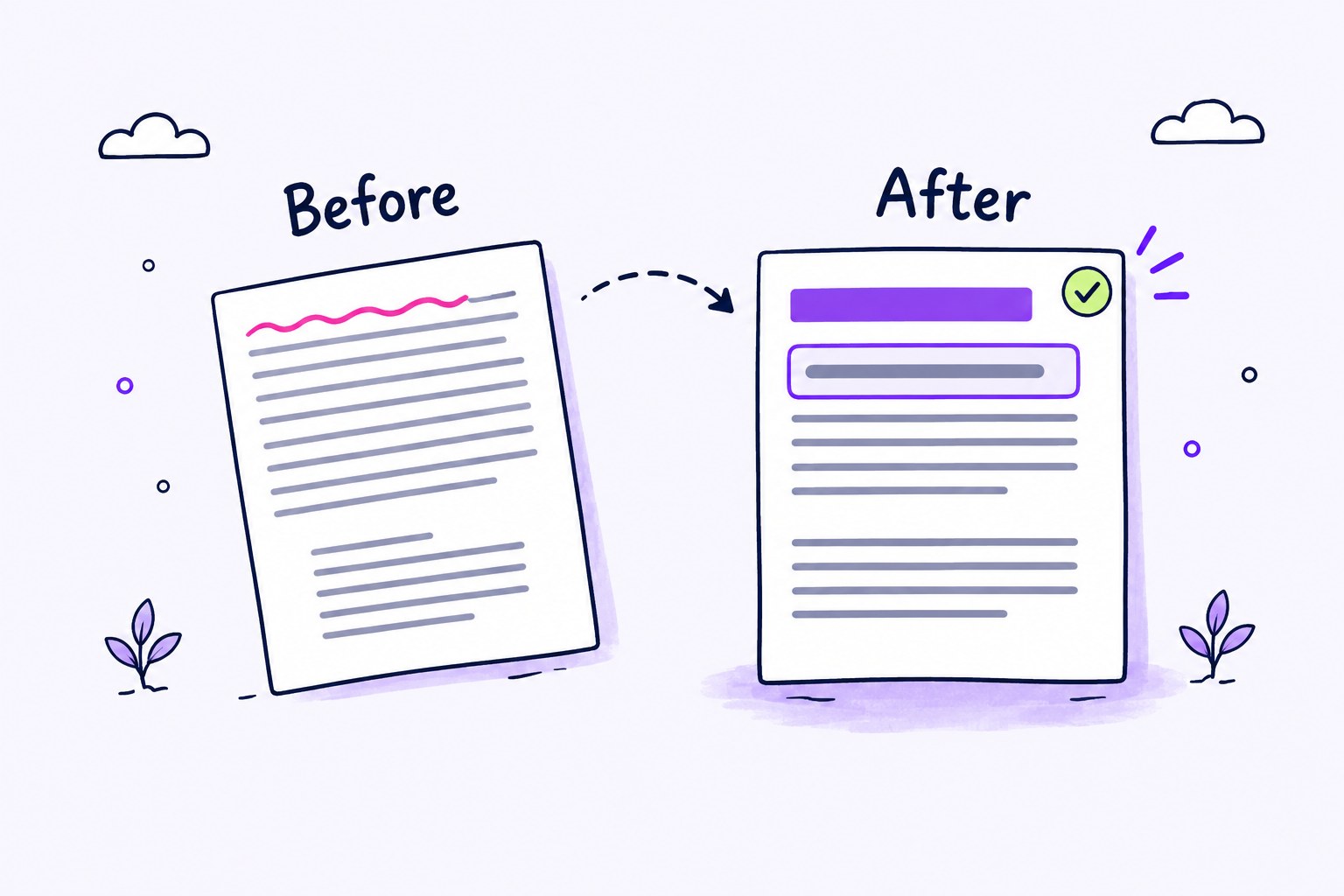
Rewriting a question-based H2 means replacing a generic opener with a sentence that answers the question directly. Question headings help clarity, but they carry no proven citation advantage.
Before:
H2 – What Is Content Syndication?
Content marketing has changed a lot in recent years, and many brands now wonder how to reach more people.
After:
H2 – What Is Content Syndication?
Content syndication is republishing your existing content on third-party sites, with attribution, to reach audiences your own site doesn’t.
Keep the qualifiers that change the conclusion. Simplifying them away for the sake of brevity costs you accuracy.
Checklist Step 3: Does Every Statistic Have a Clickable Source?
Every statistic should have a clickable link, because neither a reader nor a model can check a number without a source. Link to the original research rather than an article repeating it, and place the link beside the claim.
What to do:
-
List every number in the article.
-
Link each one to its publisher, and name the publisher in the text.
-
Add the context: date, measurement period, sample, and geography.
-
Confirm the source supports your exact claim and doesn’t stretch into causation.
-
For your own figures, link to a public methodology page.
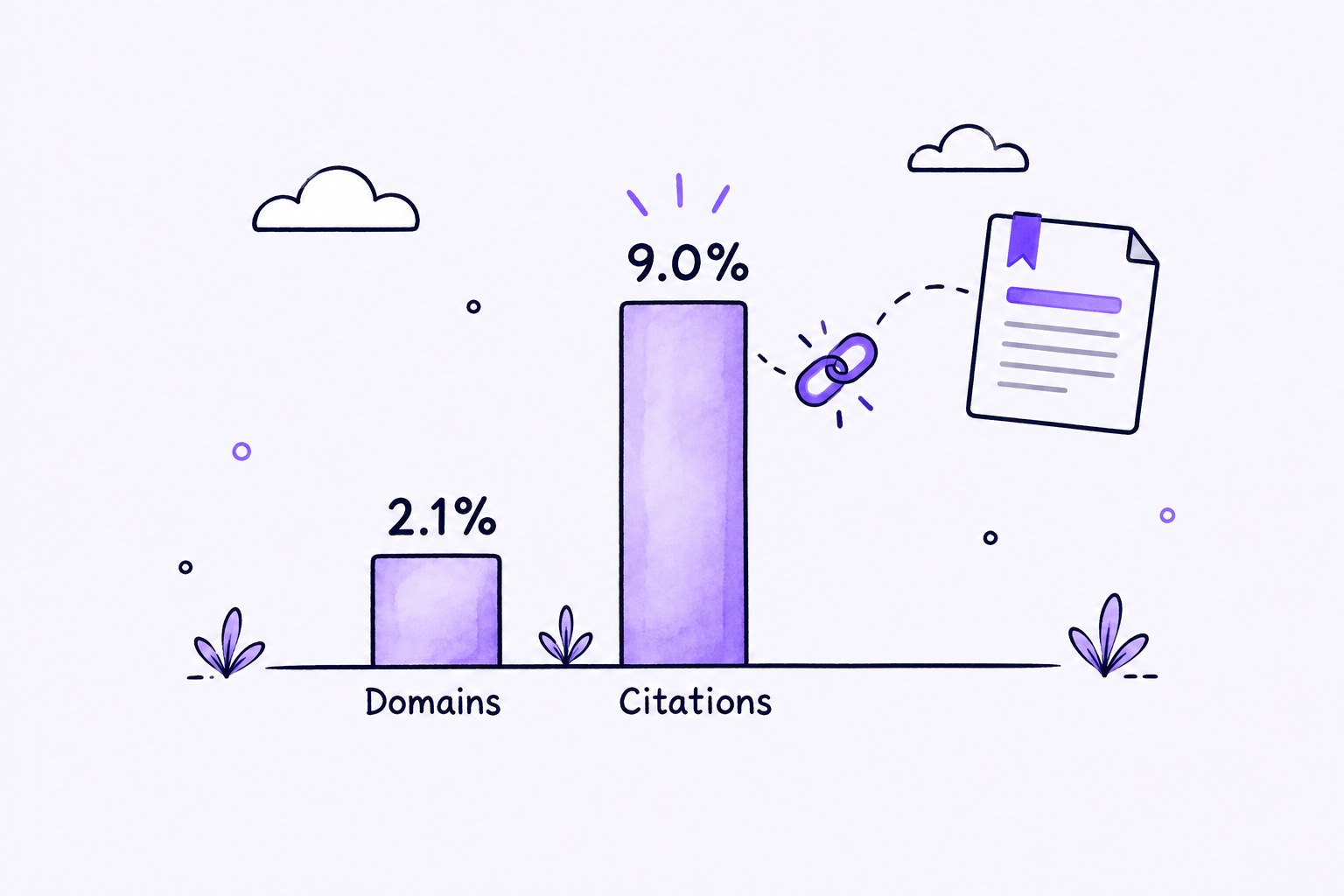
Context matters. One arXiv study extracted 366,087 URL citations from 12 AI search models. News outlets were 2.1% of unique cited domains but 9.0% of citations (arxiv). The study is observational and can’t identify causes.
Done when: every number in the article has a clickable source and a named publisher.
Owner: Agency content team, client SME for fact review.
Checklist Step 4: What Original Data Can You Publish This Week?
The original data you can realistically publish this week is a small, defensible dataset with a clear methodology, such as an internal survey or a benchmark of client results. Original data gives other sources something distinctive to reference, but originality doesn’t prove accuracy or guarantee citation.
Publish one of these:
-
An internal survey
-
Anonymized aggregate platform data
-
A benchmark of client results
-
A pricing or process audit
Each needs a stated question, method, collection date, limitations, and a stable URL. Lead with the main finding, then show tables and methods. Anonymize anything confidential, and don’t present small or self-selected samples as the whole market.
If you add Dataset markup, Google requires a name and a description of 50 to 5000 characters. It recommends creator, measurement technique, temporal coverage, measured variables, version, license, and dataset URL. Use sameAs for the canonical reference page and isBasedOn for derived datasets. Validate with the Rich Results Test and check with URL Inspection (Google Search Central).
Done when: a public page shows the finding, method, date, and limitations at a stable URL, and the markup validates.
Owner: Client supplies the data and signs off; agency handles analysis, write-up and markup.
Checklist Step 5: How Do You Strengthen Your Entity Signals?
Strengthening your entity signals means making it unambiguous who you are, what you offer, and who writes your content. This is general entity-clarity practice with no special ChatGPT lever behind it, and no universal schema requirement for ChatGPT citations has been established.
What to do:
-
Use the same name and description across company pages, author profiles, and business profiles.
-
Write accurate, verifiable author bios with relevant experience.
-
Show bylines, contact details, and publication and update dates.
-
Link related explanatory content internally so your topic coverage is coherent.
Done when: your name and description match on every owned page, and every article links to an author page that identifies the author.
Owner: Agency, with client sign-off on author bios.
Add Structured Data and Clear Author Signals
Organization and Article markup describe what’s already visible on the page, and Google recommends JSON-LD in most cases (Google). Put Organization markup on the home page and Google can better tell your organization apart from others. No properties are required, but name, url, logo, and sameAs are recommended. Use the same name and alternateName as your site name, and point sameAs to genuine social or review-site profiles (Google Search Central).
For Article markup, Google recommends author, author name, author URL, date published, date modified, headline, and image. Use Person or Organization as appropriate, and link to a page that uniquely identifies the author. Structured data doesn’t guarantee any feature will appear (Google Search Central).
Done when: the Rich Results Test passes, and the markup matches visible content.
Checklist Step 6: Are Your Brand Facts Consistent Across High-Authority Sources?
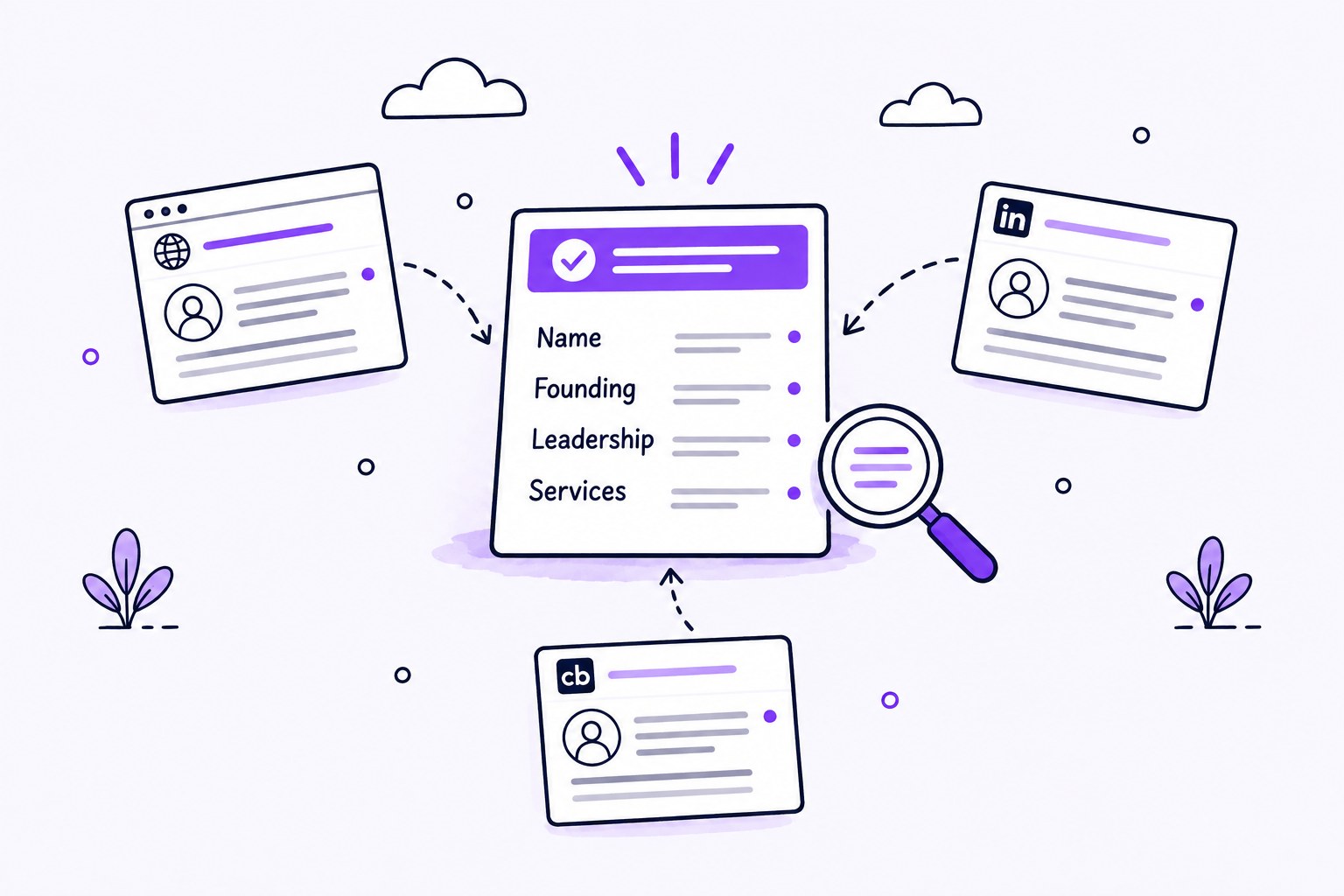
Your brand facts need to match across your site and high-authority profiles, because contradictions between sources make your brand harder to describe accurately. Keep one verified reference sheet and audit against it.
Audit these facts:
-
Name and one-sentence description
-
Category and target customers
-
Founding details and leadership
-
Services and pricing model
-
Profiles on LinkedIn, Crunchbase, directories and review sites
Fix outdated descriptions and old product details. In the Semrush study, which collected data from July to October 2025, Reddit and LinkedIn were among the five most-cited domains across ChatGPT, Google AI Mode, and Perplexity (Semrush). That makes those profiles worth keeping accurate, not a shortcut to citations.
Done when: a side-by-side sheet shows every audited fact matching across your site and each profile, with zero unresolved differences.
Owner: Agency runs the audit; client fixes profiles it controls.
Earn Third-Party Mentions Where ChatGPT Looks
Third-party mentions come from giving specialists something worth referencing, like documentation or transparent research. Different queries surface different source types, so don’t assume any publisher guarantees priority.
News coverage can be significant. In the arXiv study, Reuters and AP News accounted for 22.8% and 12.2% of all citations among OpenAI models, and the top 20 news sources made up 67.3% of their news citations (arxiv). Pitch only where your audience reads. Skip manufactured reviews and coordinated mentions, since they undermine the credibility these sources provide.
Done when: you have a list of relevant outlets, each pitched with your published data, and a log of the mentions that result.
Owner: Agency or client PR, with client experts as spokespeople.
How Do You Verify That ChatGPT Is Citing You?
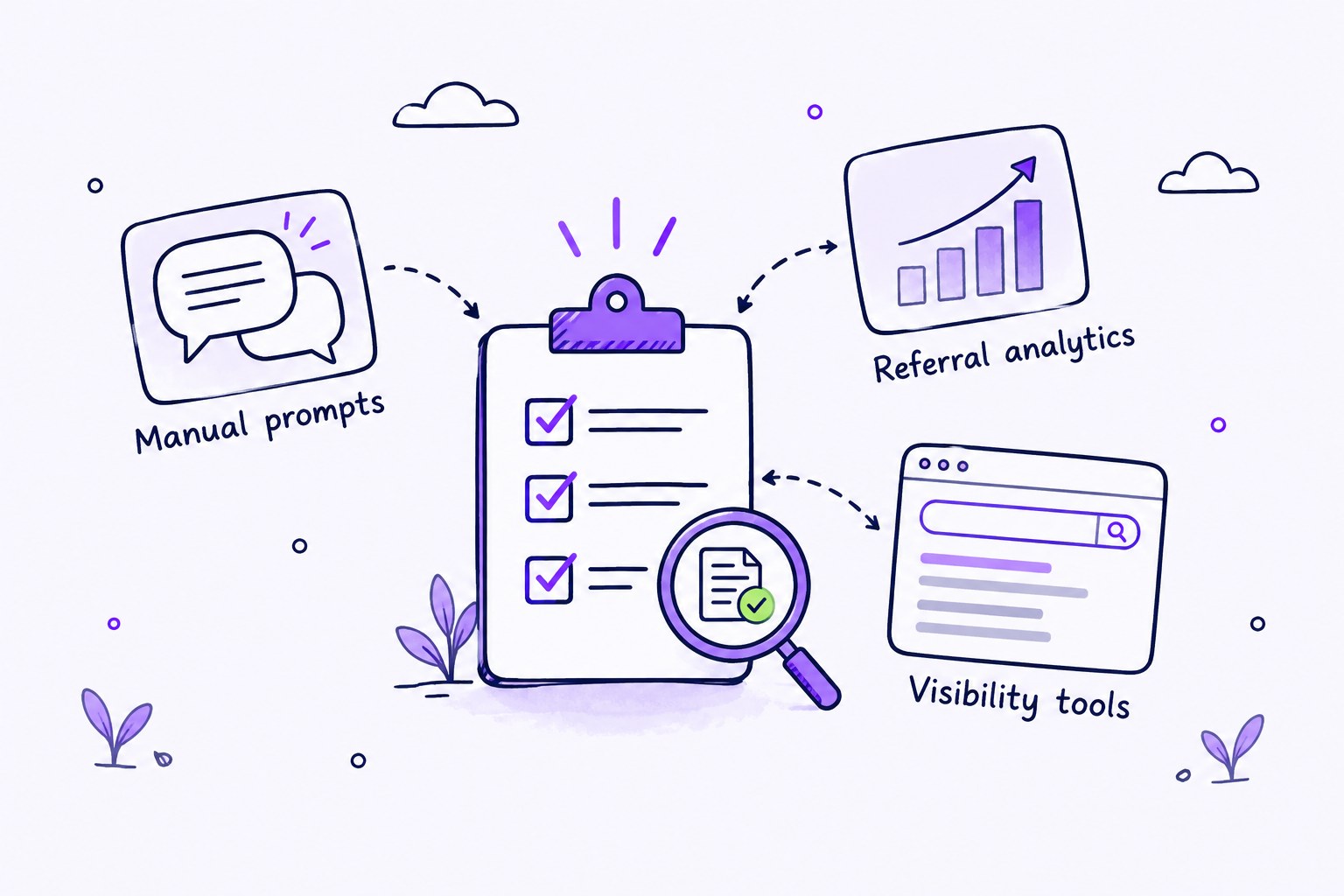
You verify ChatGPT citations by testing a fixed prompt set and cross-checking the results with referral analytics. Citations can be incomplete, outdated, or incorrect, so always open the cited source to confirm it supports the answer and is current (OpenAI Help).
| Method | What it shows | Limits |
|---|---|---|
| Manual prompt testing | Whether your pages appear and how the brand is described | A single answer isn’t a stable ranking |
| Referral analytics | Clicks that reached your site | Misses citations nobody clicks, and some visits lack attribution |
| AI visibility tools | Recurring checks and URL-level reporting | Review prompt coverage, methodology, and sampling |
Manual Prompt Testing
Manual prompt testing means running a fixed set of real buyer questions through ChatGPT and logging what it cites. Cover informational, comparison, and purchase queries along with reviews. Include unbranded prompts to test discovery and branded ones to test accuracy. Record the prompt, date, whether search was used, cited URLs, and the claims tied to each. Repeat across sessions, and log direct citations separately from brand mentions.
Owner: Agency runs the tests, client supplies buyer context.
Referral Traffic and AI Visibility Tools
Referral analytics show the visits that ChatGPT citations actually send to your site, while AI visibility tools track citations across a prompt set over time. UTM parameters on destination URLs identify campaigns that refer traffic, visible in the Google Analytics Traffic acquisition report. Google recommends utm_source, utm_medium, and utm_campaign, and values are case-sensitive (Analytics Help). Don’t assume ChatGPT referrals carry a specific utm_source value. Check which sources actually appear in your reports. If you use a visibility tool, judge trends across a defined prompt set and be wary of an unexplained score.
Which Mistakes Keep Brands From Being Cited?
One of the most damaging mistakes is blocking retrieval without noticing. The rest are quieter:
-
Login walls, crawler restrictions, or security challenges that lock crawlers out
-
Answers buried under introductions or promotional language
-
Generic summaries with no reasoning or evidence
-
Unsourced statistics or weak secondary links
-
Outdated pricing, product details, or brand descriptions that contradict other sources
-
Treating schema or keyword repetition as a shortcut
-
Changing dates without changing substance
-
Fabricated reviews, credentials, or research
-
Treating one citation as proof of sustained visibility
FAQs About Getting Cited by ChatGPT
-
Can ChatGPT cite sources? Yes, ChatGPT cites sources when it searches the web, and those responses may include citations and a Sources panel. Not every answer includes them.
-
Does robots.txt blocking affect citations? Yes. Blocking OAI-SearchBot in robots.txt keeps your site out of ChatGPT search answers, though it may still appear as a navigational link (OpenAI Developers).
-
Does schema guarantee citations? No, schema doesn’t guarantee ChatGPT citations. Structured data doesn’t guarantee a feature will appear, and no universal schema requirement for ChatGPT has been established.
-
How do you check a citation? You check a ChatGPT citation by opening the cited source and confirming it supports the claim and is current.
-
Can you guarantee a ChatGPT citation? No, nobody can guarantee a ChatGPT citation, because search placement isn’t guaranteed even for eligible sites.
-
How long does it take? Getting cited by ChatGPT has no guaranteed timeframe. The only documented figure is that a robots.txt change can take about 24 hours to affect OpenAI’s search systems (OpenAI Developers).
Next Steps: Turn This Checklist Into a 30-Day Plan With SEOwind
Your 30-Day Plan
A 30-day plan spreads the six steps over four weeks, with an owner and a completion criterion for each action. A finished checklist shows progress, but it won’t promise citations within 30 days.
-
Week 1: Pick priority questions, record existing citations and mentions, and complete Step 1 (crawl access) on the matching pages.
-
Week 2: Complete Step 2 (answer-first openings) and Step 3 (attributed statistics) on those pages.
-
Week 3: Publish one original dataset (Step 4), add author information plus Organization and Article markup (Step 5), and run the brand fact audit (Step 6).
-
Week 4: Pitch relevant outlets with your published data, repeat the baseline prompt tests, review referral traffic, open each cited source, and log the maintenance still needed.
Run the Checklist at Volume With SEOwind
Handling one site is manageable, but doing it for every client becomes a production problem. Our For Agencies service is white-label content production that combines a structured AI system with humans through the CyborgMethod. A multi-agent AI system builds briefs and drafts, RAG grounds articles in real sources, and an EEAT scoring engine with automated quality gates triggers refinement. Human-in-the-loop (HITL) editors stay involved throughout, and everything ships CMS-ready and white-labeled.
Your subject-matter specialists should still own factual accuracy, source checks, and final publication calls. To see how it fits your client roster, let’s talk.
Last updated October 2026. Crawler names and AI behavior change quickly, so recheck official documentation before you act.